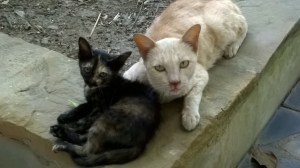
Mama Daeng and Daengdum
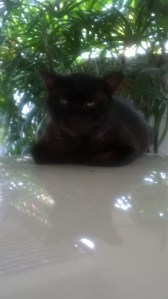
Big Dam, the Street Cat
There’s a warning in Chapter 4 of Thailand Fever that if you (a farang, a Western male) marry a Thai woman, expect to be supporting her parents when they can no longer work. And if she’s an only child, expect them to be living with you. A cultural switcheroo—Thai children, especially the youngest daughter, NEVER really leave the nest and in gratitude for being born and raised will feel forever indebted to their parents. But the worst nightmare for a Western male—who thought a mother-in-law moving in was his worst nightmare—is when an entire extended family starts moving in. I’ve heard the story more than once. And have been warned. About Thai women and their families.
On the other hand, nobody warned me about Thai street cats. Maybe because there are so many that nobody, especially Thais, pay much attention. But from my recent experience it looks like the street cats have been paying attention to the Thai families living with farang and decided it was such a good idea they should try it themselves. I was a perfect patsy. There was a black street cat already living here when I moved in who spent most of the day sunning out on my deck. I was a perfect crash-test dummy because I brought two cats with me from the States. Even though THEY were once street cats back in LA, they were now so domesticated at age seventeen and eighteen that they no longer ate fish, canned or otherwise. Canned chicken was hard to find and so expensive that I soon figured out it was cheaper to buy a whole cooked chicken. Given that the old guys were missing a few teeth, I started dicing up the meat and feeding the bones to the big street cat outside. Soon “Dam” (the black cat) had a girlfriend moving in with him (“Daeng”—a red-coated damsel). And then “Tau”, the other Alpha Male in the neighborhood, started showing up.
There were many nights that I was awakened by the howling of Tau and Dam. Many mornings I was greeted by a bloodied Dam outside my front door. Reading up, I learned that neutered males were less likely to fight. Dam, happy to be fed, was totally docile when I took him in. But he and Tau kept butting heads. When I got back from my annual trip to the States at the end of March, I had a surprise waiting for me. Daeng had given birth. And then I discovered that what I thought was a mouse infestation in my office attic was in fact another litter of kittens. Both the mom and kittens looked an awful lot like Tau—grey with black stripes. Noi, my housekeeper, fell in love with Tom and Jerry when they fell through the ceiling into my office. Daengdam, the survivor of the outside litter, she decided was “nagliat”—ugly. So the plan was to get Tom, Jerry and Belle (their mom) their shots and spayed or neutered as soon as possible and Noi would take the kittens home.
But the word was out. Two black orphan kittens from across the street showed up, followed by two more of what looked like Tau’s offspring. When I took Tom and Jerry in for their first shots, Belle and Daengdam were sick, so I brought them along. Daengdam got some vitamins and cough syrup and bounced back. Her mom turned out to have feline HIV, something domestic and wild cats can normally live with for years. But Belle’s immune system was going. Three sessions of IV fluids didn’t seem to help. I started feeding her wet food and water with a syringe, but neither one of us were enjoying it. Another week of IV injections at least bought enough time for Daengdam to finish nursing. When Daeng couldn’t walk to the litter box, I knew the time had come. The same day Daengdam lost her mother, I also managed to crush her favorite toy. She seemed to be depressed the next day. But the day after that she was tearing around the kitchen, hopping into any drawer I opened, playing with her new toys, and purring like crazy whenever I picked her up. She had so much personality (did she know she was ugly and had to compensate?) that Noi decided she wanted her after all.
The day Noi was supposed to pick up the kittens was the same day I managed to bring Tau in for neutering. When I got back I discovered Belle had somehow gotten my office door open. After the expense of having her spayed and her and her brood given shots, I came home to discover they had run for it. Noi and I looked all over, managed to find Tom, and then gave up the search.
So life on the street continues. Tom and Daengdam have a new home, but one of the twin orphans was hit by a car. Dam has mellowed and seems to have taken on the role of mother and father to the surviving orphan. Tau, though, is as ornery as ever. I can prevent a fight by feeding them on different sides of the house or threatening to fire up the garden hose. But Little Dam, the orphan Dam adopted, surprised me this morning by walking bravely—or maybe stupidly—between the two growling Alpha Males, and to my amazement breaking up the brewing brawl.
Unlike Dam, I have not mellowed. Three new cats—striped tabbies who look an awful lot like Tau—have showed up. If they stick around they will be taken in to be spayed or neutered. But no more shots, which is the strategy followed by several volunteer pet-rescue groups in Chiang Mai. No more “treats”—Fred and Bart’s leftovers only. And the neighborhood chickens that I once thought were down-homey wandering through my yard are gone. Stole too much of the cats’ dry food. And too much kii-gai (chicken you-know-what) to clean up.
After almost three months of crawling through attics, feeding wild cats until they were tame, trips to the vet, and paying vet bills I really couldn’t afford, I was tired. And then Noi sent me the pictures of Tom and Daengdam in their new collars playing with their new toys, their coats brushed out and shining, what looked like dog smiles on their faces, and it began to seem almost worthwhile…. (6/11/15)


 Curmudgeon in the Land of Smiles